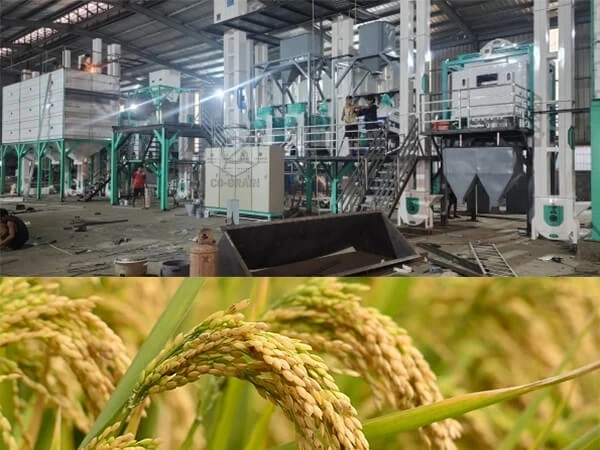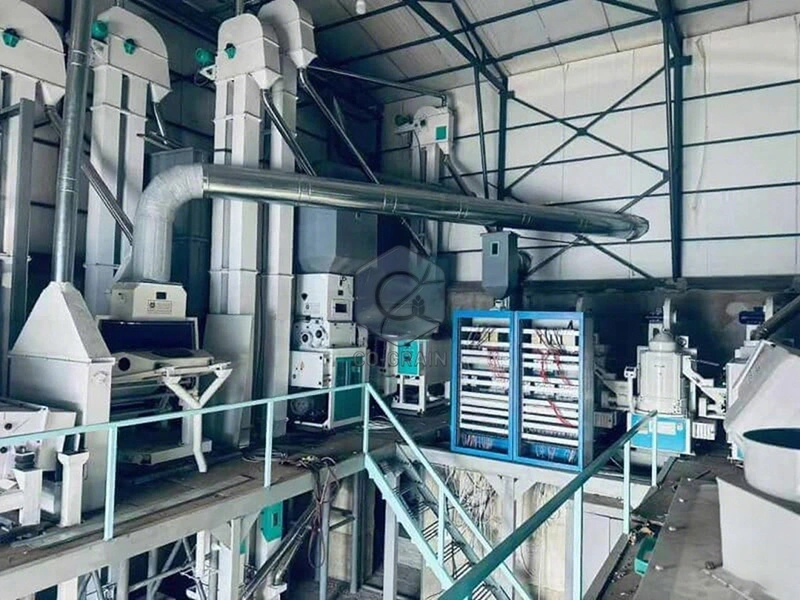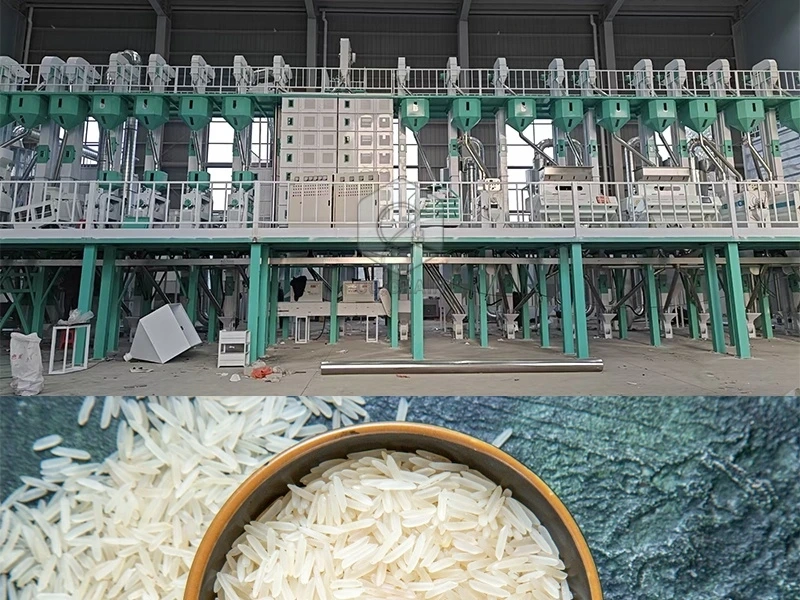
Leading Innovation in Rice Milling: A Successful 100T Project in Nigeria
25.01.22

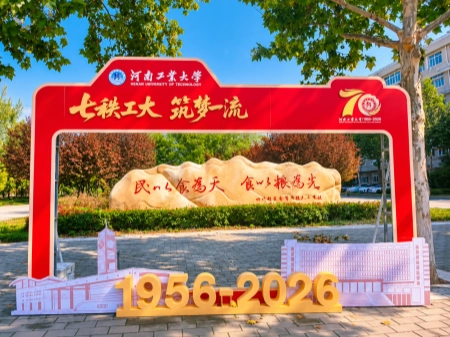
Summary: October 16, 2026, marks the 70th anniversary of Henan University of Technology (HAUT), an institution with extensive experience in grain engineering education and research. The development of modern rice milling technologies depends on continued progress in grain science, mechanical engineering and process design. With an engineering team educated at Henan University of Technology, Co-Grain combines specialized technical knowledge with industrial applications to optimize rice milling processes, improve head rice yield, maintain finished rice quality and support the development of efficient, reliable and intelligent rice processing plants worldwide.
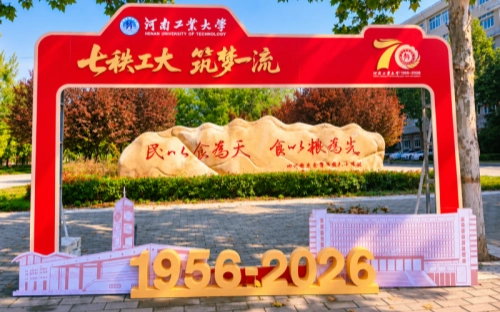
On October 16, 2026, Henan University of Technology celebrates its 70th anniversary.
Over seven decades, the university has established a distinctive academic foundation in grain science, processing technologies and related engineering disciplines.
The history of its grain engineering education can be traced to the grain processing teaching programs established in 1956.
As China's grain industry developed, grain processing technologies continued to advance, and rice milling equipment gradually evolved toward higher efficiency, automation and integrated production systems.
From traditional paddy husking and rice whitening to modern multistage milling, polishing, grading and optical sorting, rice processing has undergone continuous technological improvements.
The transition from individual machine operation to coordinated and automated production lines has also created new opportunities for improving processing quality and efficiency.
These developments support more consistent finished rice quality and provide technical methods for reducing avoidable processing losses.
On the occasion of Henan University of Technology's 70th anniversary, Co-Grain extends its sincere congratulations and reflects on how grain engineering knowledge contributes to the modernization of rice processing.
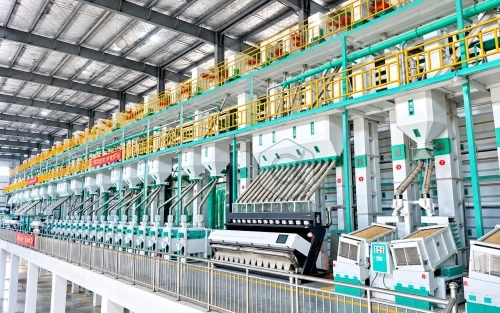
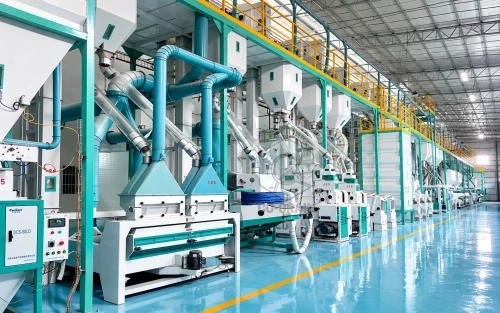
For modern rice processing facilities, production capacity remains an important performance indicator.
However, achieving high throughput alone does not guarantee efficient or profitable plant operation.
Rice milling involves several interconnected mechanical processes.
Paddy moisture content, kernel characteristics, husking pressure, whitening intensity, equipment settings and material flow all influence the final quality of milled rice.
When processing stages are poorly matched, production bottlenecks, repeated handling and unnecessary kernel breakage may occur.
Therefore, a well-designed rice milling plant must balance several important performance factors:
Among these factors, head rice yield is one of the most important indicators of rice milling performance.
Head rice yield refers to the proportion of head rice obtained from a given quantity of paddy, according to the applicable grain grading standards.
It is influenced not only by milling equipment but also by paddy variety, moisture content, harvesting practices, drying conditions and storage quality.
Improving head rice yield therefore requires coordinated management of the complete rice processing system.
Simply reducing the operating pressure of one machine is not sufficient.
Instead, engineers need to consider grain preparation and every major stage of the milling process.
This is one reason why integrated process engineering has become increasingly important in modern rice milling plants.
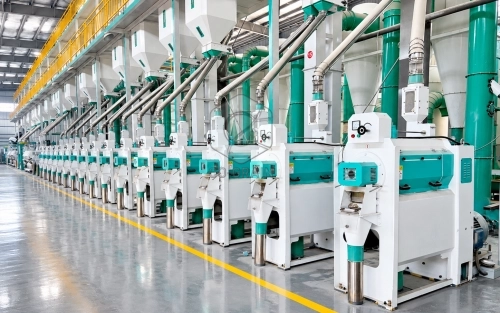
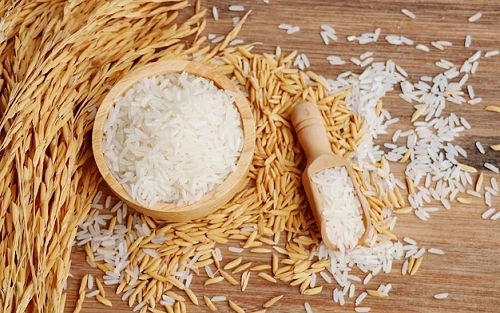
Paddy husking is one of the fundamental operations in rice milling.
Its primary purpose is to remove the outer husk while preserving the integrity of the brown rice kernel as much as possible.
Husking performance depends on several factors, including machine adjustment, grain characteristics and the selected husking method.
Improper settings may lead to insufficient husk removal, kernel damage or unstable operation.
Therefore, rice huskers must be selected and adjusted according to paddy variety, kernel characteristics and required processing capacity.
After husking, the product mixture typically contains brown rice and remaining unhusked paddy.
Paddy separators are used to separate these materials.
Unhusked paddy is returned for further husking, while brown rice proceeds to the next processing stage.
Effective paddy separation helps prevent unhusked grains from entering rice whitening equipment and supports consistent downstream operation.
The husking and separation stages should therefore be considered an interconnected processing section rather than independent operations.
Suitable equipment configuration and balanced material flow are essential for maintaining stable milling performance.
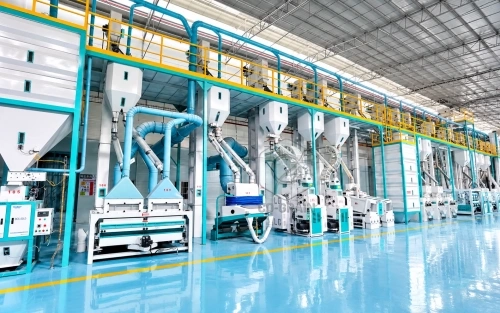
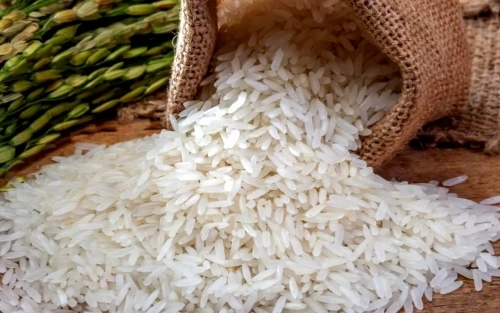
Rice whitening transforms brown rice into milled rice by removing selected portions of the bran layer.
Depending on the desired degree of milling, abrasive or friction-type rice whitening equipment may be used in different process configurations.
Rice markets differ in their requirements for whiteness, milling degree, kernel appearance and finished-product quality.
As a result, no single set of whitening parameters is appropriate for every rice variety.
Excessive whitening intensity can increase kernel breakage and remove more material than necessary.
Insufficient whitening may fail to meet target product specifications.
Modern rice milling engineering therefore requires suitable machine selection and careful adjustment of operating conditions.
In some commercial rice milling projects, multistage whitening systems can distribute the milling load across several machines.
When properly configured, this arrangement can help achieve the desired milling degree while managing mechanical stress on the kernels.
After whitening, rice polishing may be applied to improve the surface appearance and finish of the milled rice.
However, excessive polishing is not necessarily beneficial.
Polishing intensity should be selected according to rice characteristics and finished-product requirements.
Unnecessary processing pressure can contribute to kernel damage and increased processing losses.
Consequently, optimized process design and equipment adjustment are more important than simply increasing the number of machines in a production line.
After whitening and polishing, finished rice may contain kernels of different lengths, broken rice and grains with visible defects.
Modern rice milling plants use grading and optical sorting technologies to improve product classification and consistency.
Rice grading machines separate kernels according to their dimensional characteristics, particularly length or size.
Accurate grading helps classify head rice and different categories of broken rice according to market requirements.
It also supports better product management and commercial specification control.
Rice color sorters use optical detection technology to identify and remove selected discolored kernels and detectable visual defects.
These systems can help improve the uniformity of finished rice when correctly configured and operated.
However, grading and color sorting cannot compensate for every quality problem created during earlier processing stages.
Effective rice milling requires coordinated quality management throughout cleaning, husking, whitening, polishing and final sorting.
The performance of the complete production line depends on the relationship between these operations.
Rice milling engineering involves multiple technical disciplines, including mechanical engineering, grain material science, process planning and industrial automation.
Individual machine performance is important, but the arrangement and coordination of the complete processing system are equally significant.
Co-Grain has maintained a long-standing collaborative relationship with Henan University of Technology, and its engineering team is composed of professionals educated at the institution.
In practical rice milling projects, Co-Grain emphasizes the application of specialized knowledge to equipment selection, production line planning and process optimization.
Project engineers consider paddy variety, processing capacity, target milling degree, finished rice specifications and operating requirements.
They must also coordinate the capacities of paddy cleaning, husking, separation, whitening, polishing, grading, color sorting, conveying and packaging equipment.
For projects requiring higher levels of automation, integrated control and monitoring systems can support equipment coordination and production management.
Co-Grain believes that progress in rice milling technology should not be measured solely by improvements in individual machines.
It should also be reflected in the efficiency, reliability and practical performance of complete rice processing systems.
October 16, 2026, marks both the 70th anniversary of Henan University of Technology and World Food Day.
This coincidence highlights the importance of grain science, professional education, technological innovation and food security.
Rice is an essential food resource for a significant proportion of the global population.
Reducing avoidable processing losses, improving finished rice quality and utilizing rice milling by-products are all important aspects of sustainable rice processing.
Rice bran, husks and broken rice may be used in appropriate food, feed, energy or industrial applications, depending on material quality and local requirements.
Better collection and utilization of these by-products can help improve the overall value obtained from harvested paddy.
As a modern rice processing equipment manufacturer and engineering solutions provider, Co-Grain will continue strengthening its capabilities in process optimization, machinery manufacturing, engineering integration and automation.
The company remains committed to developing professional engineering expertise and applying practical innovation to industrial rice processing.
We believe that the true value of grain technology lies in its ability to transform scientific knowledge into reliable engineering applications and improve the utilization of agricultural resources.
From paddy to finished rice, and from university education to modern processing facilities, every meaningful technological improvement contributes to the long-term development of the grain industry.
Seventy Years of Excellence. A Legacy of Grain Technology.
Food Sustains Life. Grain Secures the Future.
Engineering the Future of Grain.
On the occasion of its 70th anniversary, Co-Grain extends its warmest congratulations to Henan University of Technology and wishes the university continued achievements in scientific research, engineering education and technological innovation.
Co-Grain specializes in rice milling equipment, automated rice processing lines and complete rice mill plant engineering solutions.
The company's product range includes paddy cleaners, rice huskers, paddy separators, rice whiteners, rice polishers, rice graders, color sorters, conveying equipment and automatic packaging systems.
Co-Grain also provides process engineering, equipment manufacturing, installation, commissioning and technical services for modern rice processing projects.
Website: https://m.hongjiaricemill.com/
Email: info@ricemillplants.com
WhatsApp / WeChat: 0086 18339828199
Let us be your solutions source.